
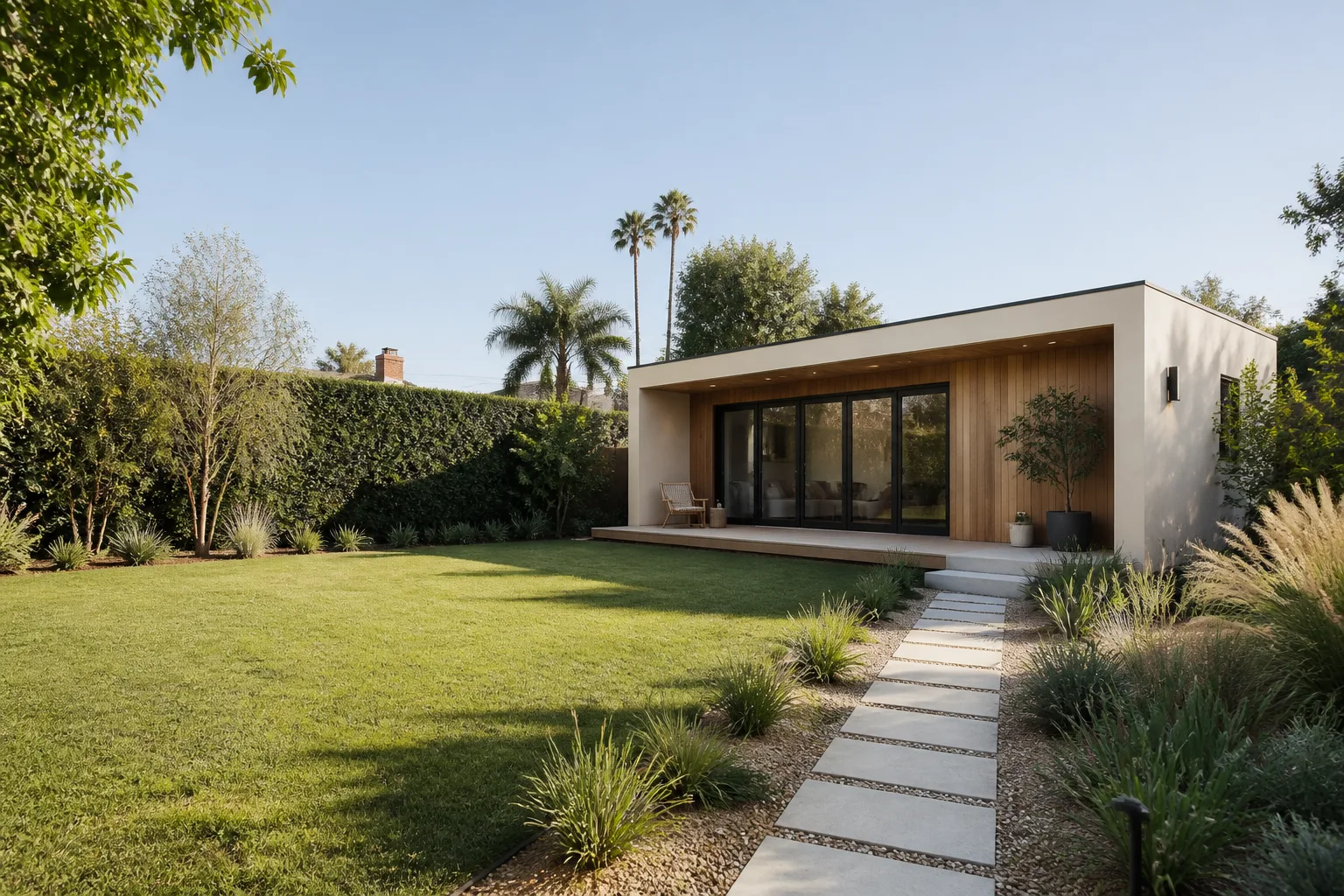
Why San Francisco Homeowners Choose Cover ADU
We provide independent Cover in San Francisco ADU service, focusing on repairs, finish work, and full installations for the S Series, Backyard Home, and Garage Conversion Kit lines. Our crew knows how Cover’s panelized systems actually behave in this city’s fog-belt microclimates, and we fix problems the way a builder fixes problems, not the way a call center logs a ticket. We’re not affiliated with Cover or authorized by Cover. We’re a local San Francisco crew that has spent years learning exactly where these units leak, settle, and flex, and we put our findings to work on every job.
That matters here more than in most cities. San Francisco’s pre-war housing stock, hillside lots, and marine air create conditions that stress factory-built ADUs in specific, predictable ways. A Cover panel that performs fine in Sacramento can delaminate in the Outer Sunset if the vapor barrier wasn’t detailed right. We know the difference because we’ve seen it, opened it up, and fixed it. If you own a Cover ADU in San Francisco or you’re considering one, call (707) 760-0502 and tell us what you’re seeing.
Why Trust Lodgewick ADU San Francisco for Your Cover ADU?
Lodgewick ADU Builders has been part of the Kingswell family since 2010, and our San Francisco crew works under The Kingswell Guarantee: a written price before work starts, a real arrival window, a clean job site, and a written guarantee on every job. If the work fails within the 365-day guarantee period, we come back and make it right at no charge. That commitment is in writing, on paper, handed to you before we touch a single panel.
Russ Delmar leads our San Francisco team. He studied construction technology at Los Angeles Trade-Technical College and spent years on foundation and finish carpentry crews before ADUs became the focus. Russ walks every Cover site before he quotes a number. He wants to see the panel alignment, the sill flashing, the slope of the ground, and the fog exposure. That’s how he knows whether a repair is straightforward or whether the first installer cut a corner that’s now everyone’s problem. His approach with Cover units comes down to one line he uses on site: “Tell me what the space needs to do, and we’ll figure out how to build it right.”
Every technician who works on a Cover ADU for us is background-checked and uniformed, so you always know who’s walking your property in San Francisco. And when you call with a question about your Cover unit at 9 pm or 6 am, a live person answers. Not a voicemail. Not a chatbot. That’s part of the Kingswell Way, and it’s the only way we know how to run a service business.
Common Cover ADU Problems We Fix in San Francisco
- Composite wall panel delamination in fog-belt microclimates. Cover uses engineered composite panels with a structural core bonded to exterior skins. In neighborhoods like the Sunset, Richmond, and Parkside, where summer fog sits for days, panels installed without proper vapor barrier detailing at the sill can absorb moisture and start to separate. The inner core swells, the outer skin buckles, and the panel loses its structural integrity. We’ve opened enough of these walls to know the pattern: it almost always starts at the bottom plate where the panel meets the foundation. The fix involves removing the interior cladding, assessing the extent of delamination, replacing damaged panels, and installing a proper sill flashing with weep holes so it doesn’t happen again.
- Roof-to-wall panel joint leaks during winter storms. The roof-to-wall transition on Cover’s panelized systems is a critical flashing detail. When the original installer rushes it or uses the wrong underlayment, San Francisco’s winter rains find the gap. Water travels along the panel joint and shows up as a stain on the interior ceiling, often far from the actual leak. We trace the leak to its source, replace the flashing, and re-seal the joint to factory tolerance. This is not a caulk-and-hope repair. If water’s already inside the wall cavity, we open it up and dry it out properly because trapped moisture in a Cover wall leads to the delamination problem above.
- Foundation anchoring drift on sloped San Francisco lots. Cover ADUs are designed to sit on a level foundation, but a lot of San Francisco backyards are anything but level. When a unit is anchored to a foundation that settles or shifts on a sloped lot, the panel connections at the corners start to move. You’ll see hairline cracks at the seams, doors that stick, or a slight racking in the frame. We re-level what can be re-leveled, reinforce the anchoring where it’s needed, and realign the panel connections so the unit sits square again. On severe slopes, we may recommend a foundation upgrade before doing cosmetic fixes, because no amount of panel adjustment survives a moving base.
- Engineered wood floor cassette warping from trapped moisture. Cover S Series and Backyard Home units often use engineered wood cassettes for the floor system. When a unit is installed on-grade without adequate airflow below, moisture from the soil migrates up and gets trapped. The cassettes warp, the floor feels springy in spots, and in bad cases you get a musty smell that doesn’t go away. We’ve seen this in Noe Valley, where a Cover S Series had a persistent odor within a year of installation. Our crew removed the interior cladding on the fog-facing wall, found delamination from a missing vapor barrier at the sill, realigned the panels, installed custom sill flashing with weep holes, replaced the damaged insulation, and resealed the interior. The odor was gone and the thermal envelope was tight again. That’s the kind of fix that requires opening the wall and understanding how moisture moves through a Cover assembly.
- Title 24 energy compliance failures on older Cover installs. Some early Cover installations in San Francisco predate current energy standards or were never properly commissioned. We handle Title 24 compliance work for Cover ADUs, including air sealing, insulation verification, and HERS testing coordination. If your unit didn’t pass inspection the first time, or you’re adding electrical loads that push it out of compliance, we can bring it current without redoing the whole envelope.
Cover Parts & Our Repair-vs-Replace Approach
When a Cover ADU needs parts, we use Cover OEM panels and connectors wherever tolerances are critical. Panel-to-panel connections, corner joinery, and the roof-to-wall transition are engineered joints. Aftermarket substitutions there are false economy and we won’t do it. For structural adhesives, fasteners, and roofing underlayment, we source equivalent products from proven aftermarket suppliers. It speeds up turnaround without cutting corners, and the parts meet or exceed the spec.
The repair-vs-replace decision comes down to one question: has moisture reached the composite core? Cover’s composite core loses strength once it’s saturated. Patching a water-damaged wall or floor cassette is like painting over rot. It looks fine until the next winter, then the problem comes back worse. We recommend replacement for saturated cassettes and delaminated panels, and we say so plainly even when a patch would be cheaper. The written estimate includes the reasoning, so you’re not guessing whether the fix will hold. Call (707) 760-0502 and tell us what you’re seeing; we’ll give you a straight answer on whether it’s a repair or a replacement.
Our Cover Service Process – Step by Step
- 1
Site walk and diagnosis. We schedule a specific arrival window, walk the property with you, and inspect the Cover unit. Russ personally walks complex Cover cases in San Francisco. We check panel alignment, flashing details, foundation anchoring, and moisture levels. You get a written diagnosis, not a verbal shrug.
- 2
Written price and scope. Before any work starts, you receive a line-item written estimate. It includes the parts we’ll use, the work we’ll do, and the price. No change orders at the door. No “we found something else” pricing. If the scope changes because the house tells us something new, the new price is in writing before the new work starts.
- 3
Repair or installation. Our crew shows up in uniform at the agreed window. We protect the work area, keep the job site clean, and do the work to Cover’s engineering intent. For prefab installations, we handle foundation and grading, panel assembly, and finish work. For Title 24 compliance, we coordinate testing and documentation. For repairs, we fix the root cause, not the symptom.
- 4
Testing and verification. On every job, we test what we touched. That means water testing on flashing repairs, alignment verification on panel work, and moisture readings where water intrusion was involved. You see the results before we pack up.
- 5
Written guarantee. Every job ends with a written guarantee under The Kingswell Guarantee, including our 365-Day Done Right Promise. If the work fails within 365 days, we return and fix it at no charge. That’s in writing on every Cover job we do in San Francisco.
Cover Products We Service & Install in San Francisco
We service and install the full Cover product range through our Home Addition Contractor services: the Cover S Series in both studio and one-bedroom configurations, the Cover Backyard Home, the Cover Garage Conversion Kit, and Cover Custom Panelized Systems. Each line has its own detailing requirements and failure points, and we’ve worked with all of them across San Francisco’s varied building conditions. We keep a local stock of common Cover-compatible fasteners, adhesives, flashing profiles, and underlayment in the San Francisco area, which means faster turnaround on routine repairs. For OEM panels and connectors, we order direct and coordinate delivery to your site.
We Also Service These Brands
Cover isn’t the only factory-built ADU system we work on. Our San Francisco crew also services and installs Abodu and Dvele units, and we bring the same written-price, written-guarantee approach to every manufacturer’s products. If you’re comparing systems or you’ve inherited an ADU from a previous owner, we can give you an honest read on what you’re dealing with and what it’ll cost to make it right.
FAQs – Cover ADU Service in San Francisco
No. We are an independent service provider and are not affiliated with or authorized by Cover. That means we’re free to tell you the truth about what a Cover unit needs, without a factory rep’s talking points. It also means we can use quality aftermarket materials where they match or exceed spec, which often speeds up repairs and lowers cost. If your Cover unit is still under manufacturer warranty, we’ll help you understand what the warranty covers and what it doesn’t. Call (707) 760-0502 if you want an independent assessment.
Yes, where it matters. For panel-to-panel connections, corner joinery, and roof-to-wall transitions, we use Cover OEM panels and connectors because those are engineered joints with tight tolerances. For structural adhesives, fasteners, and roofing underlayment, we source equivalent aftermarket products from proven suppliers. This approach keeps your unit safe and speeds up repair times without compromising the build.
Most common repairs, like flashing fixes or panel realignment, take one to two days on site. Larger jobs, like replacing a saturated floor cassette or re-anchoring a foundation on a sloped lot, can take three to five days including material procurement. We give you a written schedule before work starts, and we show up in the window we promised. The Kingswell Guarantee means the arrival window is in writing, not a vague “sometime next week.”
We service and install the Cover S Series in studio and one-bedroom configurations, the Cover Backyard Home, the Cover Garage Conversion Kit, and Cover Custom Panelized Systems. If you have a Cover unit from an earlier production year or a custom spec, call us and describe what you have. We’ll tell you up front whether it’s something we can take on and what it’s likely to cost.
It depends on what the warranty says and what the service involves. Some Cover warranties are voided by unapproved modifications, while others survive independent repairs that use OEM parts. We can’t speak for Cover’s warranty department, and we won’t pretend to. What we can do is use OEM parts where the warranty requires them, document the work thoroughly, and give you the paperwork you’d need if a warranty claim comes up. For the cost of most Cover repairs, call (707) 760-0502 and we’ll give you a written estimate.
Real numbers: a minor flashing repair on a Cover roof-to-wall joint typically runs $450 to $1,200. Panel delamination repairs, where we open the wall, replace damaged panels, and install proper sill flashing, usually fall between $1,800 and $4,500 depending on how many panels are affected. Foundation anchoring corrections on sloped lots start around $3,000 and go up with slope severity and access. Floor cassette replacement from moisture damage can run $4,000 to $9,000 including materials and labor. These are ranges, not quotes. Every Cover job gets a written line-item estimate before work starts, so you always know the number before you commit. Call (707) 760-0502 for an exact quote; estimates are free.
Yes, panel separation at the corners is one of the most common Cover issues we see in San Francisco, and it’s usually a sign of foundation movement or an undersized anchor detail. We inspect the corner connections, check the foundation for settlement, and determine whether the fix is a re-alignment job or a deeper structural correction. If the panels are still intact, we re-align and reinforce the connections. If the panels are damaged, we replace them before re-anchoring. The written diagnosis tells you exactly what’s happening and what it costs.
Yes. We handle Title 24 energy compliance for Cover ADUs in San Francisco, including air sealing, insulation verification, HERS testing coordination, and documentation. Many Cover units pass when properly commissioned, but older installations or units that have been modified sometimes fall short. We’ll assess your unit against current San Francisco requirements and give you a written scope for any work needed to bring it into compliance.
Place a bucket under the leak, then call us. Roof-to-wall panel seam leaks in Cover units don’t fix themselves and they get worse with every San Francisco winter storm. The leak you see on the ceiling is often not where the water is entering; it travels along the panel joint from the actual breach. We trace it to the source, replace the flashing, and re-seal the joint. If water has already entered the wall cavity, we open it up and dry it out properly. In the meantime, avoid running electrical devices near the leak and call (707) 760-0502; we’ll schedule a diagnosis.
Yes, in most cases. Adding a bathroom to a Cover ADU involves plumbing runs, ventilation, waterproofing, and possibly electrical upgrades for the water heater and vent fan. We’ve done this work on Cover S Series and Backyard Home units in San Francisco, and we handle the permits and inspections. The biggest variables are the existing floor cassette condition and where the plumbing can tie into the main house. Call (707) 760-0502 and we’ll walk you through what a bathroom addition would involve on your specific unit.
Yes, it’s possible, but it’s not simple. Moving a Cover ADU requires disconnecting utilities, lifting the unit off its foundation, transporting it, and re-anchoring it on a new foundation that meets current San Francisco seismic and building codes. The panelized construction actually helps here compared to stick-built, because the modules are designed to connect and disconnect. But the foundation work on the new lot is often the biggest cost, especially on sloped terrain. Before you commit to a move, call (707) 760-0502 and we’ll give you an honest read on what it would take and what it would cost.
Book Your Cover Service in San Francisco, CA
If your Cover ADU needs repair, maintenance, or a full installation in San Francisco, call (707) 760-0502. We’ll answer live, schedule a site walk, and give you a written estimate before any work starts. The 365-Day Done Right Promise applies to every Cover job we do, in writing.
Written by Russ Delmar, Owner at Lodgewick ADU San Francisco, serving San Francisco since 2010.


