A free site visit, a check of what your lot allows and a written, line-item price.
Get your free estimateHow Much Does ADU Site Prep & Utilities Cost in San Francisco?
ADU site prep and utilities in San Francisco typically run between $38,000 and $85,000 for a standard backyard accessory dwelling unit, with most homeowners landing in the $55,000 to $70,000 range once grading, trenching, sewer and water connections, and electrical service are accounted for. That’s before the dwelling itself goes up. Steep lots, old sewer laterals, and PG&E service upgrades are the three things that push San Francisco jobs past the $85,000 mark fastest.
We’ll break down where every dollar goes below, including what you can defer and what you absolutely cannot skip in a city where a single sewer lateral inspection can add $8,000 to the bill overnight.
ADU Site Prep & Utilities Cost Breakdown (2026)
Here’s what we’re seeing across San Francisco in 2026, line by line. These are real ranges from bids we’ve written and jobs we’ve completed in neighborhoods from the Outer Sunset to Bernal Heights. Your lot will move the numbers, but this is the honest ballpark.
| Line Item | Typical Range (SF, 2026) | Notes |
|---|---|---|
| Site survey & soil report | $3,500 – $6,500 | Geotech is non-negotiable; SF DBI requires it for permits on most lots. |
| Demolition & clearing | $2,000 – $9,000 | Old garage slab? Dead tree with protected status? Price climbs fast. |
| Grading & excavation | $6,000 – $22,000 | Sloped lots in Glen Park, Diamond Heights, or Twin Peaks run high. |
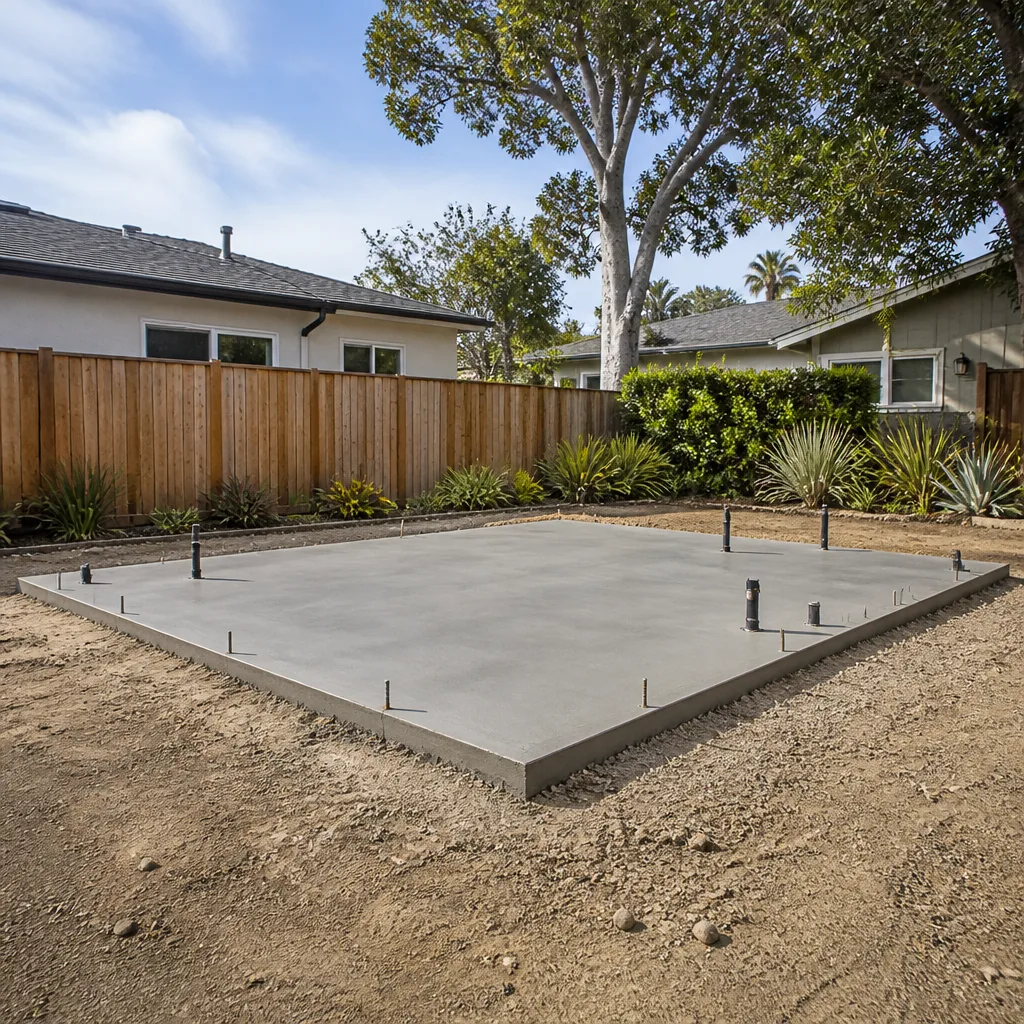
| Foundation (slab or pier) | $12,000 – $28,000 | Piers cost more but suit hillside lots better than slabs. |
| Sewer lateral connection (new or upsized) | $4,000 – $14,000 | Older homes in the Sunset/Richmond often need full lateral replacement. |
| Water line & meter upsizing | $2,500 – $8,000 | Sharing the existing 3/4″ line? You’re probably paying for a 1″ upgrade. |
| Electrical service upgrade (100A → 200A+) | $4,500 – $12,000 | PG&E trenching from the pole or vault adds $2k – $5k on its own. |
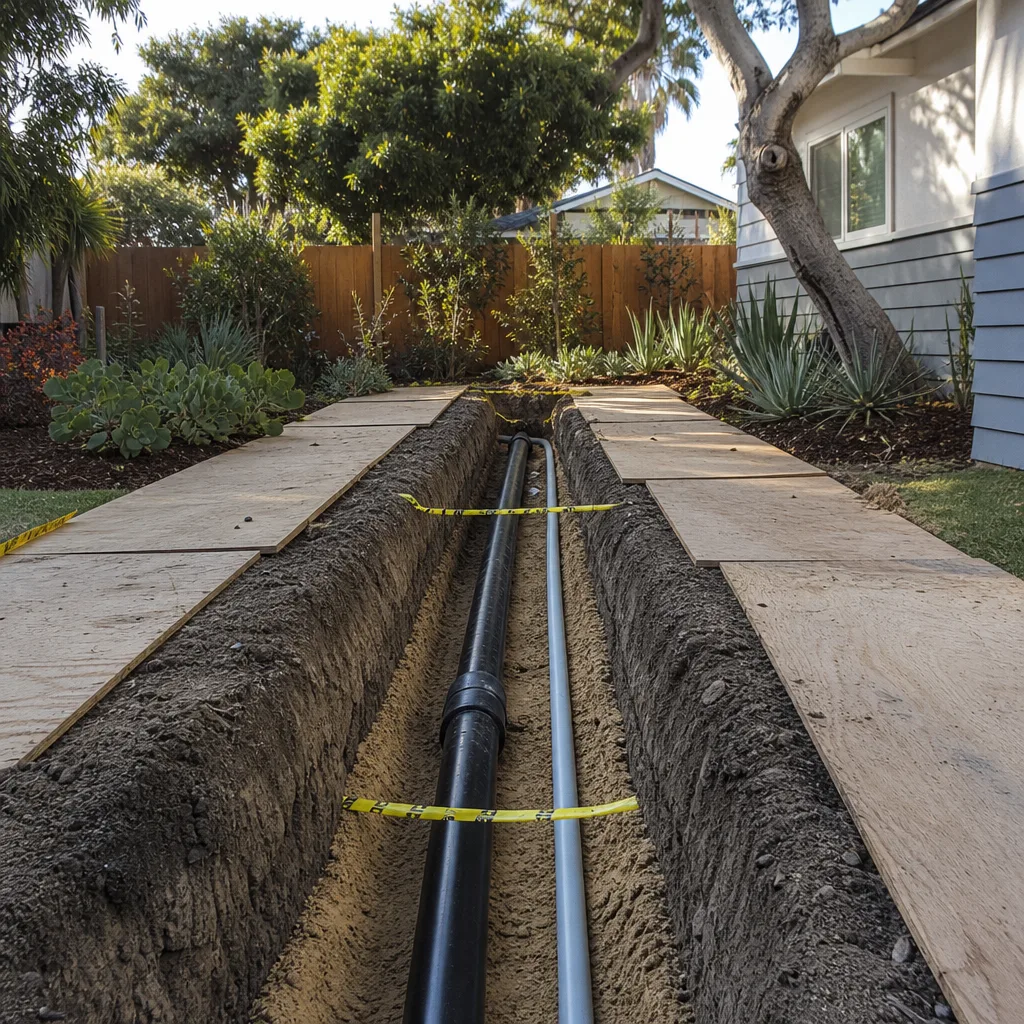
| Trenching & conduit (gas, electric, data) | $3,000 – $10,000 | Depth and distance from the main house are the drivers here. |
| SF DBI permit & impact fees | $6,000 – $14,000 | School impact fees, sewer connection fees, and plan check all stack up. |
| Site access & logistics | $1,500 – $5,000 | Narrow stairwells, no street parking, or a steep driveway? You’re paying for it. |
Three things drive San Francisco costs up in ways you won’t see in Concord or Hayward. First is the hills. A lot with a 20% slope in Noe Valley needs retaining work and pier foundations that a flat Outer Sunset lot never will. Second is the age of the sewer lateral. Homes built before 1960 often have clay pipe that SF PUC will flag during inspection, and replacing a 60-foot lateral under a concrete walkway is a $10,000 day. Third is electrical service. Older San Francisco homes still running 100A panels can’t legally feed an ADU, and PG&E’s timeline for a service upgrade is not fast. Budget for it early.
What Affects ADU Site Prep & Utilities Pricing in San Francisco
Your neighbor’s ADU might cost $40,000 in prep and yours comes in at $75,000, even on the same block. Here’s why.
- Slope and soil conditions. A flat lot in the Richmond on sand and a hillside in Portola with serpentine rock are two completely different excavation jobs. Pier-and-grade-beam foundations on slopes run $200 – $350 per linear foot in SF; a flat slab comes in closer to $14 – $20 per square foot.
- Sewer lateral condition and length. SF PUC’s sewer lateral inspection ordinance hits every ADU project. If your lateral is cracked orangeburg or bellied clay, you replace it. Distance from the ADU to the sewer main matters too: 30 feet is manageable, 80 feet under a deck is not.
- Electrical service capacity. Most San Francisco houses built before 1980 have 100A service. An ADU with a kitchen, laundry, and mini-split typically needs 60 – 100A on its own, which means a 200A panel upgrade and likely a PG&E service drop. Budget $6,000 – $12,000 total, more if the transformer is across the street.
- Access to the rear yard. If the only way to your backyard is through a 36-inch gate and down a flight of stairs, crews can’t bring a mini-excavator in. Hand-digging and concrete pumping add $4,000 – $9,000. We see this constantly in the Mission and Russian Hill.
- Permit timeline and DBI review. San Francisco’s Department of Building Inspection has improved, but plan review still takes 4 – 8 months for ADUs. Every month of delay is another month of carrying costs. We’ve seen projects where earlier geotech submittal shaved six weeks off the calendar, which is money saved even if the line item looks identical.
- Prefab vs. stick-built sequencing. If you’re going with Abodu, Cover, Dvele, or Mighty Buildings, the site prep has to be precise: tolerances are tight, and the utilities have to be stubbed exactly where the factory drawings say. That precision costs a little more upfront but saves thousands in change orders later. We’ve delivered lots for every major prefab ADU brand and the lesson is always the same: reconcile utility locations before the foundation pour, not after.
Is Site Prep the Most Expensive Part of an ADU?
It depends on the lot, but for most San Francisco properties, site prep and utilities run 30% to 45% of the total project cost before the dwelling itself. A turnkey 400-square-foot ADU in the Outer Sunset might cost $180,000 to $240,000 all-in, and $55,000 to $70,000 of that is site work. On a flat lot with a good sewer lateral and 200A service already in place, you can bring site work down to the $38,000 side. On a hillside with a bad lateral and a 100A panel, you’re on the $85,000 side, no question.
The mistake homeowners make is comparing their lot to a friend’s lot in a different neighborhood. A garage conversion in Excelsior shares almost no prep costs with a rear-yard ADU in Forest Hill. Always ask for a site-specific written price, not a per-square-foot rule of thumb.
How to Save on ADU Site Prep & Utilities
You can’t cut corners on sewer laterals or electrical service, but you can trim thousands with smart sequencing and honest planning. Here’s what actually works in San Francisco.
- Order the geotech report before you commit to a design. Foundation design depends on soil data, and if you wait until after plans are drawn, you’ll redo drawings. That’s $2,000 – $4,000 in rework you can avoid by sequencing correctly.
- Check your sewer lateral early. SF PUC offers a lateral inspection program, and many homeowners would rather know on day one if they’re replacing a lateral. If you’re in the Sunset or Richmond with a pre-1960 home, assume it needs work and budget for it rather than being surprised later.
- Combine the panel upgrade with your ADU permit, not after. A 200A service upgrade is a separate PG&E process either way. Filing it alongside your ADU permit means one trench, one inspection schedule, and one set of plan check fees instead of two.
- Consider where the ADU sits on the lot. Moving the footprint 10 feet closer to the main house can cut trenching cost by $3,000 – $6,000 and simplify the sewer connection. On a 25-foot-wide SF lot, every foot matters.
- Bid the site work as its own scope. Some general contractors bundle site prep into a per-square-foot number that hides line items. We give a written price with every line item spelled out before work begins, so you can see exactly what you’re paying for and make real tradeoffs.
If you want to know where your San Francisco lot falls in these ranges, call (707) 760-0502 and we’ll walk the property and give you a written number. Estimates are free, and the written price is the price. No change at the door.
San Francisco ADU Utility Requirements: What You Need to Know
Every San Francisco ADU, whether it’s a backyard unit or a garage conversion, has to meet the same baseline utility requirements. The specifics vary by lot, but the framework is consistent.
Sewer is the big one. San Francisco owns and operates its sewer system through the SF PUC, and the city’s lateral inspection ordinance means your existing sewer lateral gets checked before you connect. If it fails, you replace it. There’s no deferral, no grandfathering, and no easy way around it. The good news is a new lateral is a 50-year fix that also improves your main house’s drainage, so it’s not wasted money.
Water service is simpler. Many San Francisco homes have a 3/4″ meter, and an ADU with a full bath and kitchen typically needs a 1″ meter and a dedicated line. If your meter is in the sidewalk, the plumber ties in at the meter and runs a separate line to the ADU. If it’s in the basement, you’re looking at a longer run and more wall penetrations.
Electrical is where we see the most surprises. A 400-square-foot ADU with an electric range, mini-split heat pump, and laundry can pull 70 – 100 amps. If your house has 100A service, you need a 200A panel upgrade and likely a new PG&E service drop. PG&E’s process requires an application, engineering review, and scheduling that can take 3 – 6 months. Start it as soon as you decide to build.
Gas is optional. Many San Francisco ADUs are going all-electric now, which eliminates gas line trenching and venting requirements. It’s cheaper to skip gas entirely, and with SF’s push toward electrification, it’s often the faster permit path too. We’ll help you weigh gas vs. electric based on how you’ll actually use the space.
What Site Prep Looks Like on a Real San Francisco Lot
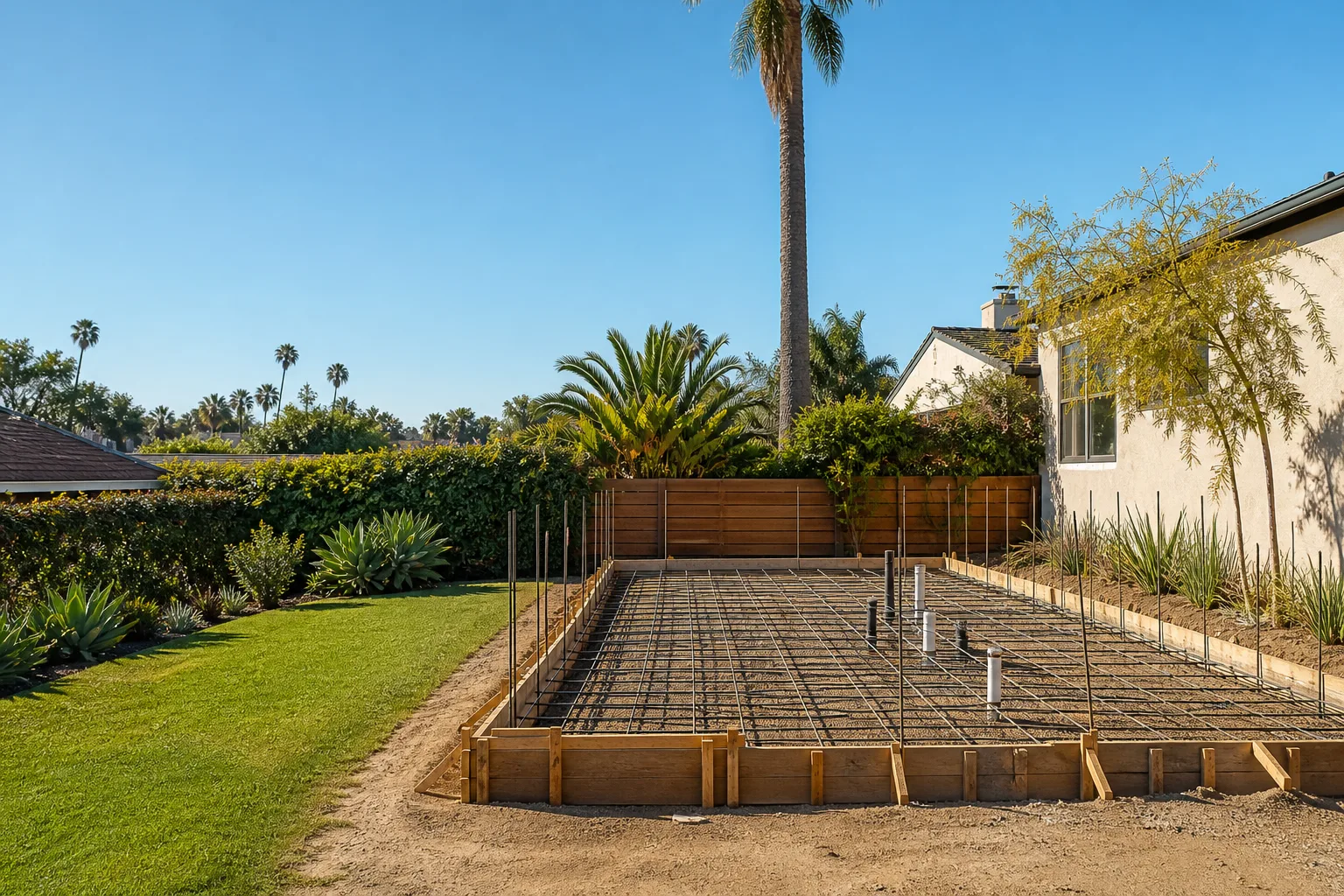
Here’s a recent example from the Outer Sunset, on a 25×100 lot with a 1952 single-family home. The homeowner wanted a 400-square-foot backyard ADU with a kitchenette and full bath. Sewer lateral was clay and failed inspection. Electrical was 100A. The backyard was flat but required hand-carrying material through a 32-inch side gate.
The final site prep and utilities bid came in at $61,400, broken down as follows: survey and geotech were $4,800, demolition and clearing $3,200, excavation and grading $7,100, slab foundation $14,800, sewer lateral replacement $9,700, water line and meter upgrade $4,100, 200A electrical service upgrade $8,900, trenching $3,600, permits and fees $8,200, and access labor $3,000.
Total site work was $61,400 on a project that ended up at $198,000 all-in. That’s 31% of the budget before the ADU itself. The same project on a hillside lot in Noe Valley with a pier foundation would have pushed site work past $75,000.
And in Bernal Heights, we regularly see spring failures due to the clay-heavy soil in that neighborhood. The ground moves through the wet season, so slab foundations there need deeper footings or a mat slab. That’s a $4,000 – $6,000 add that you won’t see on a sandy lot in the Sunset. Local conditions drive local pricing, which is why our written prices are always site-specific.
Prefab ADUs: Do They Lower Site Prep Costs?
Somewhat, but not in the ways people expect. A prefab ADU from Abodu, Cover, Dvele, Mighty Buildings, or Boxabl shifts cost from framing and finishing into site prep. The factory builds the dwelling; the site work still has to be perfect.
For a prefab unit, you’re paying for tighter foundation tolerances (typically within 1/4 inch), precise utility stubs, and sometimes crane access. In San Francisco, crane placement on a narrow street can require a city permit and a traffic control plan, which runs $2,000 – $5,000 depending on location. The savings come later: prefab construction is faster, so you’re not paying carrying costs during a 10-month site build. Net, prefab often reduces total cost by 10 – 20% in SF, but site prep stays roughly the same as a stick-built ADU.
We’ve prepared sites for Abodu, Cover, Dvele, and Mighty Buildings units in San Francisco, and we know the utility stub locations and foundation specs each manufacturer requires. That familiarity means our written price reflects the real scope, not a guess that turns into a change order after the factory drawings arrive.
FAQs – ADU Site Prep & Utilities Cost
How much does ADU site prep cost per square foot in San Francisco?
Site prep and utilities in San Francisco typically run $95 to $175 per square foot of the planned ADU footprint, which puts a 400-square-foot unit at $38,000 to $70,000 for site work alone. Flat lots with good sewer laterals and existing 200A service fall on the low end; hillside lots with utility issues fall on the high end. Call (707) 760-0502 for a written price on your specific lot.
Can I skip the sewer lateral replacement to save money?
No. San Francisco requires a sewer lateral inspection on every ADU project, and if your lateral fails, replacement is mandatory before the city signs off. Replacement costs $4,000 to $14,000 depending on length and depth. There’s no workaround, but a new lateral is a 50-year asset that also improves drainage for your main house. We’ll show you the inspection report before recommending any work.
Is it cheaper to convert a garage than build a backyard ADU in San Francisco?
Usually yes, by $20,000 to $40,000 on the site prep side. A garage conversion already has a foundation, roof, and some utility stubs, so you’re saving on excavation, grading, and trenching. But you’ll still pay for electrical service upgrades, sewer tie-ins, and insulation, and parking replacement requirements can add cost. The tradeoff is you lose your garage. We’ll give you a written comparison of both options before you commit.
How long does ADU site prep take in San Francisco?
Site prep and utilities typically take 6 to 10 weeks from first dig to foundation cure, not counting permit review time at the DBI. Excavation, grading, and utility trenching run 2 – 3 weeks, foundation work another 1 – 2 weeks, and utility connections and inspections fill the rest. PG&E electrical service upgrades run on their own timeline and can add 2 – 4 months if not started early. We sequence everything so the site work doesn’t sit idle waiting on the utility company.
Does the 365-Day Done Right Promise cover site prep?
Yes. The 365-Day Done Right Promise applies to the site work we complete, including grading, foundation, and utility connections. If anything we built fails within 365 days, we come back and make it right at no charge, and that commitment is in writing on every project before work begins. That’s the Kingswell Guarantee, and it’s been the standard at Lodgewick ADU Builders since we opened our doors in 2010.
Can you come out and give me a real number before I commit?
Yes. We’ll walk your San Francisco lot, check your sewer lateral records, look at your electrical panel, and give you a written price for site prep and utilities before any work begins. The number you see is the number you pay. No change at the door, no surprise line items. Call (707) 760-0502 to schedule a free estimate. A live person answers 24/7.
Get a Written Price for Your San Francisco ADU Site Prep
Every San Francisco lot is different, and the only way to know your real number is to walk the property. Russ Delmar and the team at Lodgewick ADU San Francisco have been preparing sites across this city since 2010, and we’ll give you a written price before any work starts. That price includes every line item, every permit, and every utility connection. If the work isn’t done right, the 365-Day Done Right Promise means we come back and fix it, in writing, every time.
Call (707) 760-0502 for a free estimate today. A live person answers, and we’ll walk your lot within the week.
Written by Russ Delmar, Owner at Lodgewick ADU San Francisco, serving San Francisco since 2010.
Pricing reflects the San Francisco market as of 2026. Lodgewick ADU San Francisco offers free estimates – call (707) 760-0502.
What Our Customers Say
"The ADU came out beautiful and the permitting, which terrified me, was handled start to finish. They kept me updated every week so I was never wondering what was happening."
- Shauna Mills"Turned our detached garage into a little guest house. Clean crew, respectful of the neighbors, and no mystery charges at the end. Love how it turned out."
- Carmela Fontes"I was nervous about adding on but they walked me through every step and every cost before we started. No surprise change orders halfway through like I'd heard horror stories about."
- Eleanor Pratt