
Last updated October 15, 2026
Seasonal ADU Care for San Francisco: Year-Round Homeowner’s Guide
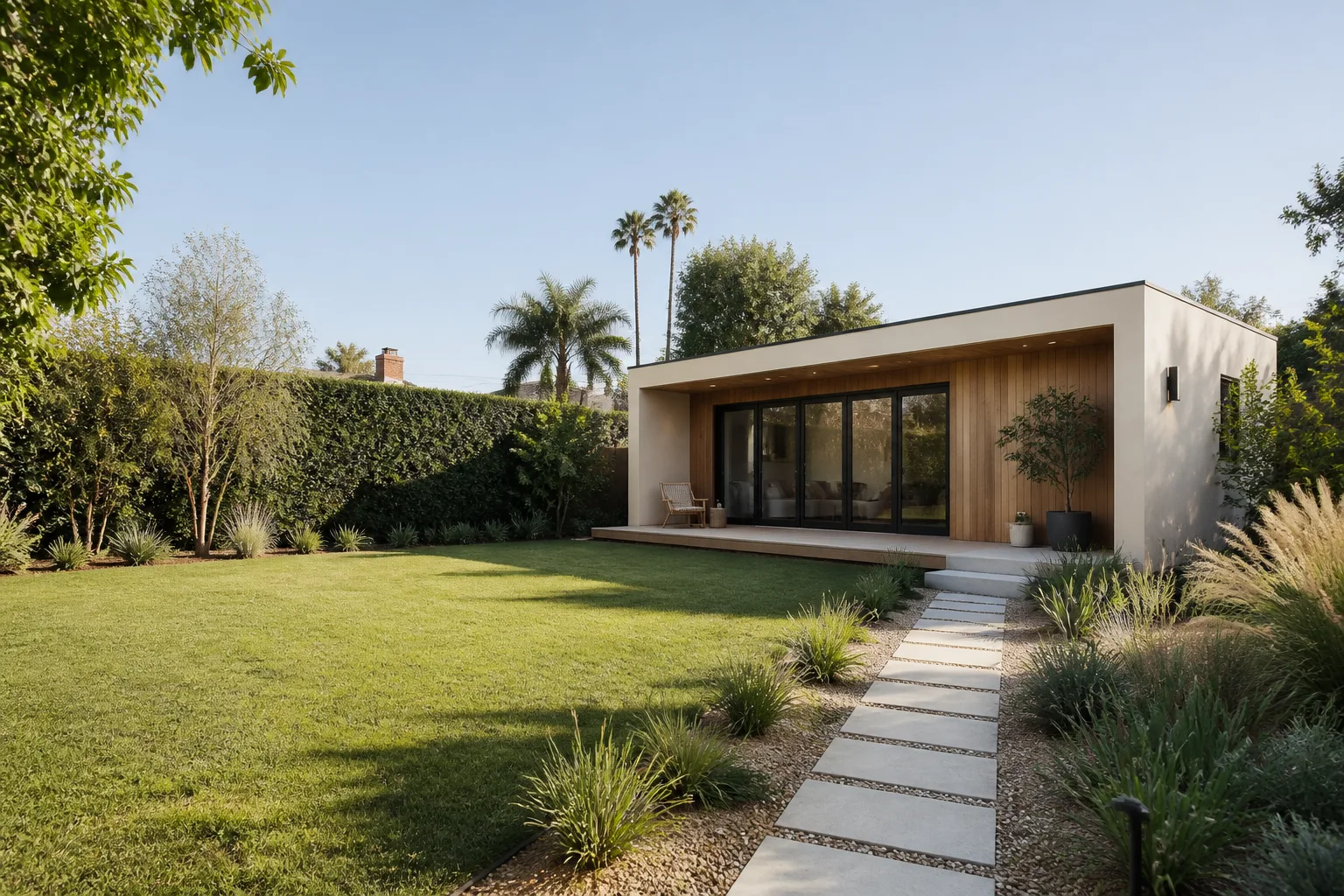
Most San Francisco homeowners skip “winterizing” because the temperature rarely drops hard enough to freeze pipes. That’s a reasonable instinct, but it misses the actual threat. San Francisco gets roughly 40 inches of rain in a typical year, and nearly all of it falls between November and March. An accessory dwelling unit (ADU) – a self-contained living space on your property, whether it’s a detached backyard cottage, a garage conversion, or an attached addition – absorbs that moisture differently than your main house because it often sits at grade level, has a flat or low-slope roof, and was built on a tighter budget. The damage doesn’t show up as a burst pipe. It shows up as rot, efflorescence, and failed sealant months after the rain stops. This guide lays out a month-by-month care plan calibrated to San Francisco’s actual climate patterns, so you can catch small problems before they become expensive ones. For more guides & resources, visit our blog.become five-figure repairs.
Quick Answer
Seasonal ADU care in San Francisco comes down to four concentrated efforts: a pre-rain drainage and weatherstrip check in October, a post-rain moisture and rot inspection in March, a dry-season sealant and smoke-readiness pass in June, and a marine-layer exterior review every August. A homeowner who spends about four to six hours per year on these checks will prevent the vast majority of weather-related ADU failures in this climate.
Table of Contents
- November – February: The Rainy Season Protocol
- March – May: Post-Rain Inspection and Rot Prevention
- June – September: Dry Season, Wildfire Smoke, and Roof Membrane Checks
- The Marine Layer Factor: Why the West Side Ages Differently
- The One-Page Seasonal Maintenance Log (And Why It Matters for Warranty Claims)
- Seasonal Care Differences: Prefab ADUs vs. Stick-Built Conversions
- Common Mistakes to Avoid
- When to Call a Professional
- Frequently Asked Questions
November – February: The Rainy Season Protocol
In San Francisco, the rainy season is when ADUs reveal their construction weaknesses. The city’s storm pattern is not dramatic – you won’t see the kind of downpours that hit the Gulf Coast – but it is relentless. Weeks of intermittent rain, often light but persistent, saturate the soil around your foundation and keep exterior surfaces damp for extended periods. That sustained moisture is what does the damage. Wood that stays wet for weeks at a time feeds the fungal growth that leads to rot. Sealant that would hold up fine under a quick storm gets pushed past its limits.
Here’s what we’ve seen in San Francisco specifically, working on ADUs and garage conversions across the city: the problems that surface in January and February almost always trace back to October decisions – or missed October checks.
The October Pre-Rain Checklist
Schedule one focused hour in early October, before the first sustained storm system arrives. Walk through these items in order:
- Clear and inspect gutters and downspouts. San Francisco is full of mature trees – eucalyptus, cypress, Monterey pine – that drop needles and leaves through September and October. A clogged gutter on a small-footprint ADU sends water cascading down the siding instead of away from the structure. Check that downspouts extend at least 3 feet from the foundation. Water dumping right at the base is the leading cause of ADU foundation erosion in San Francisco’s clay-heavy soils.
- Check grade slope around the ADU. The ground should slope away from the structure at about a 5% grade – roughly a 6-inch drop over 10 feet. If you see soil that has settled or been washed level, add compacted soil to restore the slope. Flat or inward-sloping grade means water pools against the sill plate.
- Test weatherstripping on all exterior doors. Close each door and look for daylight around the edges. San Francisco wind-driven rain pushes water horizontally in ways that vertical rain never does, especially on west-facing exposures. Worn weatherstripping on an ADU door lets water in at the threshold, and that water sits against the subfloor.
- Inspect window and door caulking. Run your finger along the caulk beads. If it’s hard, cracked, or pulling away from the surface, scrape and replace it. Use a high-quality exterior silicone or polyurethane caulk rated for the Bay Area’s temperature swings.
- Check crawl space or under-floor vents if you have them. Make sure vents are clear of debris. Blocked vents trap moisture under the floor, which creates the exact conditions for mold and wood rot that San Francisco’s warm-wet winters encourage.
What a Problem Looks Like vs. Normal Settling
Every structure settles. Hairline cracks in drywall or stucco that are uniform in width, less than 1/16 of an inch, and haven’t changed in a year are almost always cosmetic. But cracks that widen at the top, show water staining, or appear suddenly after a storm are worth investigating. A vertical crack running through a foundation corner is more concerning than a diagonal hairline across a wall face. And any crack that lets water in – you’ll know from the staining – is a problem regardless of size.
If you’re planning to add an ADU or convert a garage in the next year, this rainy season is the best time to observe how water moves across your lot. Watch where puddles form, where gutters overflow, and where wind pushes rain against exterior walls. You’ll know exactly what conditions your new unit needs to withstand. Our ADU Builders in San Francisco page explains how we account for these site-specific drainage patterns in every build.
March – May: Post-Rain Inspection and Rot Prevention
By March, the heaviest rain has usually passed, and San Francisco settles into its foggy spring pattern. This is the single most important inspection of the year. Why? Because moisture intrusion damage is rarely visible while it’s happening. It shows up as slow-moving indicators weeks or months after the water has done its work. Catching efflorescence or early rot in March means a $40 tube of sealant instead of a $4,000 sill plate replacement in July. See our ADU Warning Signs: A San Francisco Homeowner’s Reference Guide for what to watch for.
The Post-Rain Walkthrough
- Look for efflorescence on interior and exterior concrete and masonry. Efflorescence is the white, chalky deposit that forms when water moves through concrete or brick and carries salts to the surface. In San Francisco, you’ll most commonly see it on exposed foundation walls, garage slabs, and concrete steps. A light dusting means moisture is moving through the material. Heavy, recurring efflorescence means there’s a persistent water source – often a downspout draining too close to the foundation or a negative slope.
- Examine all wood-to-ground contact points. ADUs and garage conversions often have wood framing, trim, or siding within a few inches of grade level. That’s where rot starts. Probe suspicious areas with a screwdriver or awl. Wood that gives easily or feels spongy has active rot. In San Francisco’s climate, rot fungi thrive during the wet season and stay active through the mild spring. A small soft spot in March can be a structural issue by June.
- Check for micro-cracks in stucco, siding, and trim. San Francisco’s clay soils expand when wet and contract when dry. This seasonal movement opens micro-cracks in exterior finishes – especially at joints and corners. Those hairline cracks are entry points for next winter’s rain. Seal them now, while conditions are dry enough for caulk and sealant to cure properly.
- Inspect flashings around roof penetrations. Vents, skylights, and any place where a pipe or conduit passes through the roof are the most common leak sources on small structures. Look for lifted flashing, separated sealant, or rust streaks on the roof surface below.
- Check the interior for musty odors. Your nose is a remarkably accurate mold detector. Stand inside the ADU with the door closed for a minute after the space has been sealed up. A persistent mustiness – especially in corners, closets, or under sinks – means moisture trapped somewhere. In a garage conversion, the area behind drywall where the garage door used to be is a frequent culprit.
San Francisco’s Fungal Climate Accelerates Everything
Here’s the thing most national “spring maintenance” checklists miss: San Francisco does not dry out the way inland California does. The marine layer keeps relative humidity high through May and June. Fungal growth that would go dormant in a Sacramento spring keeps metabolizing here. That means rot moves faster between March and May in the Sunset District than it does anywhere east of the Caldecott. Our garage conversion experience in San Francisco has shown us the same pattern repeatedly: moisture that infiltrates a wall in January produces visible rot by March, and structural damage by June. This accelerated timeline is why the post-rain inspection matters so much.
June – September: Dry Season, Wildfire Smoke, and Roof Membrane Checks
Summer in San Francisco is dry and – depending on the year – smoky. Both conditions stress an ADU in specific ways. The dry season is when gaps widen: wood shrinks, sealant cracks, and joints that were perfectly tight in February open up enough to let in the next rainy season’s first storm. And wildfire smoke, which has become a regular feature of Bay Area summers, puts a measurable load on your HVAC system and air quality.
Dry Season Sealant and Gap Checks
Schedule this pass for early June, before the peak of the dry heat. Walk the exterior and look specifically for gaps that did not exist in March:
- Joints between dissimilar materials. Where wood trim meets stucco, where window frames meet siding, where a prefab module seam sits against a site-built element. These junctions expand and contract at different rates through the dry season.
- Roof membrane seams on flat or low-slope roofs. Many San Francisco ADUs have flat or low-slope roofs, which are the standard for detached backyard units. The membrane – whether it’s TPO, PVC, or modified bitumen – expands in the summer sun. Look for bubbles, lifted edges at parapet walls, and any area where the membrane has pulled away from flashing. A gap that opens in August lets water in during November’s first storm.
- Exterior door and window alignment. Wood frames shrink in low humidity. A door that has started sticking or a window that won’t latch cleanly is telling you the frame has moved. Minor seasonal sticking is normal, but persistent misalignment suggests the structure is settling unevenly.
Wildfire Smoke and Your ADU’s HVAC System
In recent years, wildfire smoke has become a summer reality in San Francisco. When the air quality index climbs, your ADU’s HVAC system works harder. Here’s the protocol:
- Upgrade to MERV 13 filters before smoke season begins. Standard MERV 8 filters catch dust but not fine particulate matter. MERV 13 catches most smoke particles. Install them in June so the system is ready before the first smoke event surprises you.
- Check filters after every smoke event. A week of heavy smoke can clog a filter that would normally last three months. If the filter looks dark or ash-coated, replace it – even if it was new in June.
- Run the system on recirculate mode during smoke events. If your ADU HVAC unit has that option, it prevents fresh smoke from being pulled in from outside.
- Inspect outdoor HVAC units for ash accumulation. Ash settles on condenser coils and reduces efficiency. Gently rinse coils with a hose (unit off) after smoke clears.
If you’re in the planning stages of building an ADU, wildfire smoke resilience is a design consideration most homeowners discover too late. High-quality air sealing, the right filter capacity, and a properly sized HVAC system make a measurable difference when the hills are burning. Our Lodgewick ADU San Francisco home page covers how we approach build quality as a first principle rather than an afterthought.
The Marine Layer Factor: Why the West Side Ages Differently
San Francisco is not one climate. If you live in the Outer Sunset, the Outer Richmond, or anywhere west of Twin Peaks, your ADU lives in a fundamentally different environment than one in the Mission, Noe Valley, or Bernal Heights. The marine layer – the persistent fog bank that rolls in off the Pacific – changes how exterior materials age.
West-side ADUs spend hundreds of hours per year in cool, saturated air. The average relative humidity on the fog-shrouded side of the city sits materially higher than on the east side. That constant moisture load means:
- Exterior paint and opaque stains fail faster. The high humidity prevents paint from fully curing the way it does in drier air. Blistering, peeling, and chalking that might take five years in the Mission can happen in three in the Sunset. Check west-facing walls especially – they catch both fog and wind-driven rain.
- Mold and mildew on exterior surfaces is constant. North-facing and shaded walls on west-side properties grow algae and mildew that east-side homes rarely see. A soft wash with a mild bleach solution every August keeps it in check.
- Sealant joints stay hydrated and are less likely to crack from dryness – but more likely to fail from fungal growth. The failure mode changes. On the west side, you’re watching for black staining and biological growth in caulk joints rather than cracking and separation.
- Metal fasteners and flashing corrode faster. Salt-laden fog accelerates rust on exposed fasteners, flashing, and any galvanized hardware. Inspect these annually and replace with stainless or coated fasteners if you see orange staining.
East-side ADUs – in the Mission, Potrero Hill, Dogpatch, and the Bayview – experience the opposite pattern. They get more sun, more heat, and larger temperature swings. Sealant dries and cracks. Paint fades rather than peels. Wood shrinks more dramatically. The seasonal checklists in this guide work for both sides, but know which failure mode is likely for your location. If you’re planning an ADU, material selection should account for whether you’re building in fog country or in the sun belt of San Francisco. Our ADU Cost Breakdown: The San Francisco Homeowner’s Reference for 2026 can help you budget for climate-appropriate materials. We match materials – whether from Abodu, Cover, or Dvele – to the specific microclimate of your lot, not a generic Bay Area standard.
The One-Page Seasonal Maintenance Log (And Why It Matters for Warranty Claims)
Here’s a practice that almost no San Francisco ADU owner does, and every one should: keep a written maintenance log. One page. Four entries per year. It takes ten minutes per entry and can save you real money if a warranty claim ever comes up.
Why Documented Maintenance Matters
Warranty claims on ADU components – roofing, windows, water heaters, HVAC units, prefab modules from manufacturers like Mighty Buildings or Abodu – frequently hinge on a single question: did the homeowner perform reasonable maintenance? If your roof membrane fails in year four and the manufacturer asks for maintenance records, saying “I think I checked it” is not an answer. A dated log showing seasonal inspections is.
At Lodgewick ADU San Francisco, every build or repair includes a written guarantee through The Kingswell Guarantee – with a free return visit if the work fails within the 365-day guarantee period. But our guarantee, and every manufacturer’s warranty, assumes the homeowner is doing basic seasonal care. The log is your evidence that you held up your end.
What to Record
- Date of each inspection. Ideally tied to the four seasonal anchors: early October, mid-March, early June, late August.
- What you checked. Use the checklists in this guide as your template.
- What you found. Even if it’s “no issues noted,” write that down.
- What you did. “Replaced weatherstripping on west door” or “resealed window caulk with DAP Dynaflex 230” is specific enough.
- Photos. Take two or three photos per inspection. Phone photos with timestamps are acceptable documentation.
A Simple Log Template
Keep it on paper in a folder, or use a notes app. Either works. The key is that it exists and gets updated. Here’s the structure:
- Date:
- Seasonal anchor: Pre-Rain / Post-Rain / Dry-Season / Marine-Layer Review
- Items checked:
- Findings:
- Actions taken:
- Photos attached: Yes/No
That’s it. Four entries a year. In three years, you have twelve entries that tell a complete story of responsible stewardship. If anything ever fails, that story is worth far more than the hour it took to write it down.
Seasonal Care Differences: Prefab ADUs vs. Stick-Built Conversions
Not all ADUs age the same way through the San Francisco seasons. A prefab unit from a manufacturer like Abodu, Cover, or Dvele is built in a controlled factory environment and assembled on site. A garage conversion or stick-built addition is framed and finished in the open air, subject to San Francisco’s weather during the build itself. Both are excellent options – this is a question of knowing how each type behaves.
Prefab ADUs
- Module seams are the maintenance priority. Where modules join together on site is where sealant gets stressed by settling and temperature movement. Check these seams in June (maximum shrinkage) and October (before rain).
- Factory painting and coating systems are typically more uniform. But they’re not immune to the marine layer. West-side owners should still expect accelerated paint aging.
- Roof membranes on prefab units are usually installed to factory spec. That’s good, but the membrane still needs the same annual inspection as any other flat roof.
- Factory-built units often have superior air sealing. This is a real advantage during wildfire smoke season. A tightly sealed prefab ADU with a MERV 13 filter will maintain interior air quality better than a loosely sealed conversion.
Garage Conversions and Stick-Built Additions
- The existing garage slab is often the weak point. Garage slabs were originally poured with a slope toward the garage door – which is the opposite of what you want in a conversion. If the conversion didn’t account for that, water pools against the new door or wall.
- The junction between existing house framing and new ADU framing moves. This is especially true in San Francisco, where many homes are 80 to 110 years old and have settled into their final position. The new addition settles more in its first 3 to 5 years, and the seam between old and new shows it.
- Stick-built ADUs dry unevenly in San Francisco’s climate. Wood framed during the rainy season dries slowly, and if the build was rushed, you may see nail pops, drywall seams, and trim gaps appear during the first dry season. These are usually cosmetic and fixable.
Whatever type of ADU you have or are planning, the seasonal rhythm stays the same: October drainage, March moisture, June sealant, August marine-layer review. Only the specific details change. Our team at Lodgewick ADU San Francisco has worked with both prefab and site-built systems, and we configure each project for the seasonal reality of a specific lot. If you’re comparing construction approaches for a home addition, our Home Addition Contractor in San Francisco page breaks down what matters for existing-home integration.
Common Mistakes to Avoid
- Skipping the October gutter check because “it’s just a small ADU.” A small roof still sheds thousands of gallons over a San Francisco winter. A detached ADU with a 400-square-foot roof receives about 10,000 gallons of rain per year. Every gallon that drops at the foundation edge is a gallon that erodes soil and works its way toward the sill plate.
- Treating efflorescence as a cosmetic issue. White chalky deposits on your foundation or concrete are not just ugly. They tell you water is actively moving through the material. Ignoring it means the water keeps moving – and eventually, it moves into whatever sits on top of that concrete.
- Assuming the marine layer means you don’t need to worry about dry-season damage. Even if you live in the foggy Outer Sunset, your ADU still experiences drying – just slower and from different causes. The east-facing wall that sees afternoon sun is drying and shrinking while the north-facing wall stays saturated. That differential is what creates cracks.
- Replacing weatherstripping with whatever is on sale at the hardware store. San Francisco’s wind-driven rain demands a heavier-duty weatherstrip than a dry climate does. Cheap foam strips compress and fail within a season. Use silicone or EPDM rubber rated for exterior exposure.
- Never documenting anything. When a warranty claim comes up – and they do come up, even on well-built ADUs – the homeowner who can produce a dated maintenance log is negotiating from strength. The homeowner who says “I don’t remember the last time I checked the roof” is negotiating from hope.
- Checking the roof only when it rains. By the time water is dripping through the ceiling, the membrane has been compromised for months. Dry-season inspections are how you find the small problem before it becomes an emergency – and before it becomes an insurance claim.
When to Call a Professional
Most of the seasonal checks in this guide are DIY-appropriate: clearing gutters, testing weatherstripping, walking the perimeter, noting cracks and stains. But some findings warrant a trained eye. If you discover active wood rot in a structural member, a foundation crack wider than 1/8 of an inch that has grown or shows water staining, a roof membrane with bubbling or lifted seams, or persistent mold growth that returns after cleaning, call a professional. The same applies if your ADU has a failing seal at the roof-to-wall junction, or if a prefab module seam has separated enough that you can see daylight. These are not DIY fixes, and attempting them without the right experience usually makes the repair more expensive, not less. Before starting any major work, review ADU Permits, Codes & Inspections in CA: What You Need to Know.
Lodgewick ADU San Francisco offers free estimates in San Francisco – call (707) 760-0502 to schedule one. Our written price comes before any work starts, and every project includes a written guarantee backed by The Kingswell Guarantee.
Frequently Asked Questions
Four times per year, tied to the seasonal anchors: early October (pre-rain drainage check), mid-March (post-rain moisture and rot inspection), early June (dry-season sealant and roof membrane review), and late August (marine-layer exterior check). Each inspection takes 30 to 60 minutes.
You don’t need to winterize against freezing, but you do need to prepare for the rainy season. In San Francisco, the winter threat is sustained moisture, not cold. The October checklist – gutters, grade slope, weatherstripping, caulk – is more important here than any pipe insulation routine. Call (707) 760-0502 if you’d like help with a pre-rain inspection.
DIY seasonal maintenance is under $100 per year if you’re just replacing caulk, weatherstripping, and filters as needed. Professional inspections or repairs cost more: a handyman-level fix like resealing windows might run $200 to $500, while roof membrane repair can range from $600 to $2,500 depending on the extent. For an exact quote on ADU repairs, call (707) 760-0502 – estimates are free.
Water intrusion at the foundation-sill-plate junction, usually caused by inadequate grade slope or downspouts that empty too close to the structure. It’s not dramatic – no one posts photos of it on social media – but it accounts for more ADU damage in San Francisco than any other single issue.
Smoke doesn’t structurally damage an ADU the way fire or water does, but it does load the HVAC system, clog filters, and settle ash on exterior surfaces. The bigger long-term concern is air quality inside the unit. Installing MERV 13 filters before smoke season and replacing them after each major smoke event is the most effective protocol.
Yes, with proper maintenance. Factory-built ADUs from manufacturers like Abodu, Cover, and Dvele are engineered for coastal conditions and typically have superior air sealing compared to site-built structures. The maintenance priority for prefab units is the module seams and roof membrane, which need the same annual seasonal checks as any other flat-roof structure.
The Bottom Line
San Francisco doesn’t have harsh seasons, but it has predictable stress cycles – and an ADU that ignores them pays for it in slow, expensive ways. The pattern is simple: prepare for rain in October, inspect for damage in March, seal gaps in June, and review the marine-layer exposure in August. Four focused checks per year, documented in a one-page log, prevent the vast majority of weather-related ADU failures in this city. If you’re considering adding an ADU, converting a garage, or building a home addition, the same seasonal thinking should inform the design and material choices from day one. Lodgewick ADU San Francisco builds with San Francisco’s climate in mind – and we put the price in writing before any work starts. Call (707) 760-0502 to schedule your free estimate.
Written by Russ Delmar, Owner at Lodgewick ADU San Francisco, serving San Francisco since 2010.


