
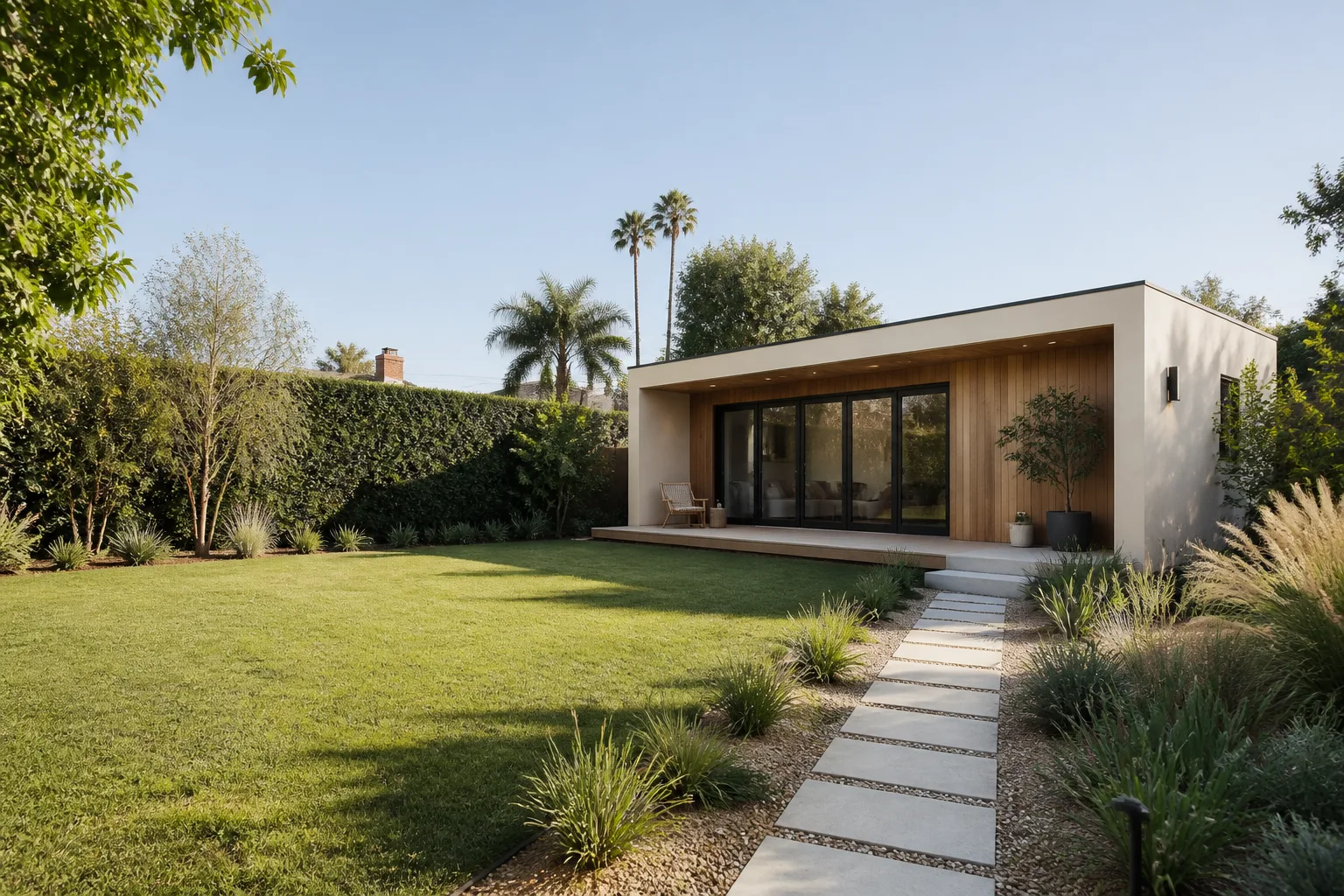
James Hardie ADU Builders in San Francisco: What to Know First
James Hardie ADU builders in San Francisco typically charge between $280 and $420 per square foot for a complete accessory dwelling unit, which means a 500-square-foot backyard unit lands somewhere around $140,000 to $210,000 all-in, including Hardie siding, permits, and finishes. As an independent James Hardie service provider, Lodgewick ADU San Francisco handles everything from the concrete pour to the final siding inspection, with a written price before any work starts and a 365-Day Done Right Promise in your hand before the first nail goes in.
This page is for homeowners in San Francisco who already own a property with James Hardie siding, or who are planning an ADU that needs to match existing Hardie lines like HardiePlank lap siding or the TruExterior trim system. If you’re trying to figure out whether your garage conversion can keep its current Hardie cladding, whether you need a full re-side, or what a junior accessory dwelling unit might cost on your specific San Francisco lot, you’re in the right place. Call (707) 760-0502 and Russ Delmar will pick up.
How James Hardie Products Fail – and How We Fix Them
James Hardie fiber cement is a solid product, but it’s not invincible, and San Francisco’s marine climate exposes every mistake. Here’s what we see on ADU projects across the city:
- HardiePlank lap siding wicking at the cut edge. On San Francisco ADUs within two miles of the ocean, like the Sunset or the Richmond, we routinely see unpainted field cuts on HardiePlank that absorb fog moisture and swell at the bottom edge. The telltale is a chalky white line two to three inches up from the drip edge. Our fix: we cut with a shearing tool or diamond blade, prime every field cut with Hardie’s approved edge sealer, and flash the sill. Skipping that primer step is how a 30-year siding product fails in eight.
- HardiePanel vertical siding installed without the drainage gap. Some San Francisco ADU additions from the early 2010s used HardiePanel directly over building wrap with no rainscreen. Behind stucco or wood, that traps moisture and you get soft sheathing behind a panel that still looks fine from the street. We see this in garage conversions around Bernal Heights where the existing wall was left in place and the builder just furred out over it. Our fix: we open the wall enough to check sheathing, add a rainscreen gap per Hardie’s installation specs, and replace the wrap before re-installing.
- Trim board joints on HardieTrim batten boards failing at caulk lines. HardieTrim holds paint well, but the seam where a batten meets a window casing fails when the installer used a cheap acrylic caulk. The joint opens, water follows the fastener line, and you get streaks of rust down the board. We saw this on a Dogpatch ADU where rust stains looked like a leak from the window, but it was actually caulk shrinkage at the batten. Our fix: we pull the old caulk, re-seal with a high-quality elastomeric, and touch up with a paint match that includes the correct sheen.
- HardieSoffit panels sagging on the underside of an ADU eave. HardieSoffit installations from the mid-2010s sometimes used mismatched fastener schedules and the panels start to bow along the reveal line. It’s a cosmetic issue that becomes a water issue if the bow opens a gap at the rake. We fix the fastening pattern, re-align, and replace any cracked sections, which is easier on a detached ADU than trying to match a full re-side.
- Brittle corners on older HardiePlank from the mid-2000s. Before James Hardie reformulated certain regional lines, some San Francisco homes had HardiePlank that became chalky and brittle at outside-corner miters within fifteen years, not thirty. If your ADU shares a wall with a main house from that era, the corner returns may be the first thing to snap. Our team replaces the corner with a metal outside corner profile whenever possible because it sheds water better than a raw miter in this climate.
Our James Hardie ADU Builders Process
Here’s how a James Hardie ADU build or siding repair works with Lodgewick ADU San Francisco, from first call to final walkthrough:
- 1
Site walk. Russ Delmar walks the property before quoting a number. He’s done ADU projects within a few blocks of Dolores Park where Victorian lot lines make every build its own puzzle, and he wants to see what the Hardie siding looks like, what’s behind it, and how the drainage flows.
- 2
Written price. You get a line-item price in writing before any work starts. No change orders at the door. The price includes materials, labor, permit fees, and disposal.
- 3
Parts decision. For a James Hardie job, we use OEM Hardie products for the siding face, but we’ll recommend paint-match and trim systems that hold up better in San Francisco’s fog belt than the original spec when that’s the right call.
- 4
Permits and prep. We pull permits for ADUs in San Francisco, handle the inspections, and protect the existing siding on any shared wall. The job site stays clean.
- 5
The build. Our crews install per James Hardie’s written installation specs, including the edge sealing and flashing details that most failures trace back to. We’re background-checked and uniformed, and you’ll always know who’s on site.
- 6
Inspection and the 365-Day Done Right Promise. After final inspection, you get the guarantee in writing. If anything fails within 365 days, we come back and make it right.
What James Hardie ADU Builders Costs in San Francisco
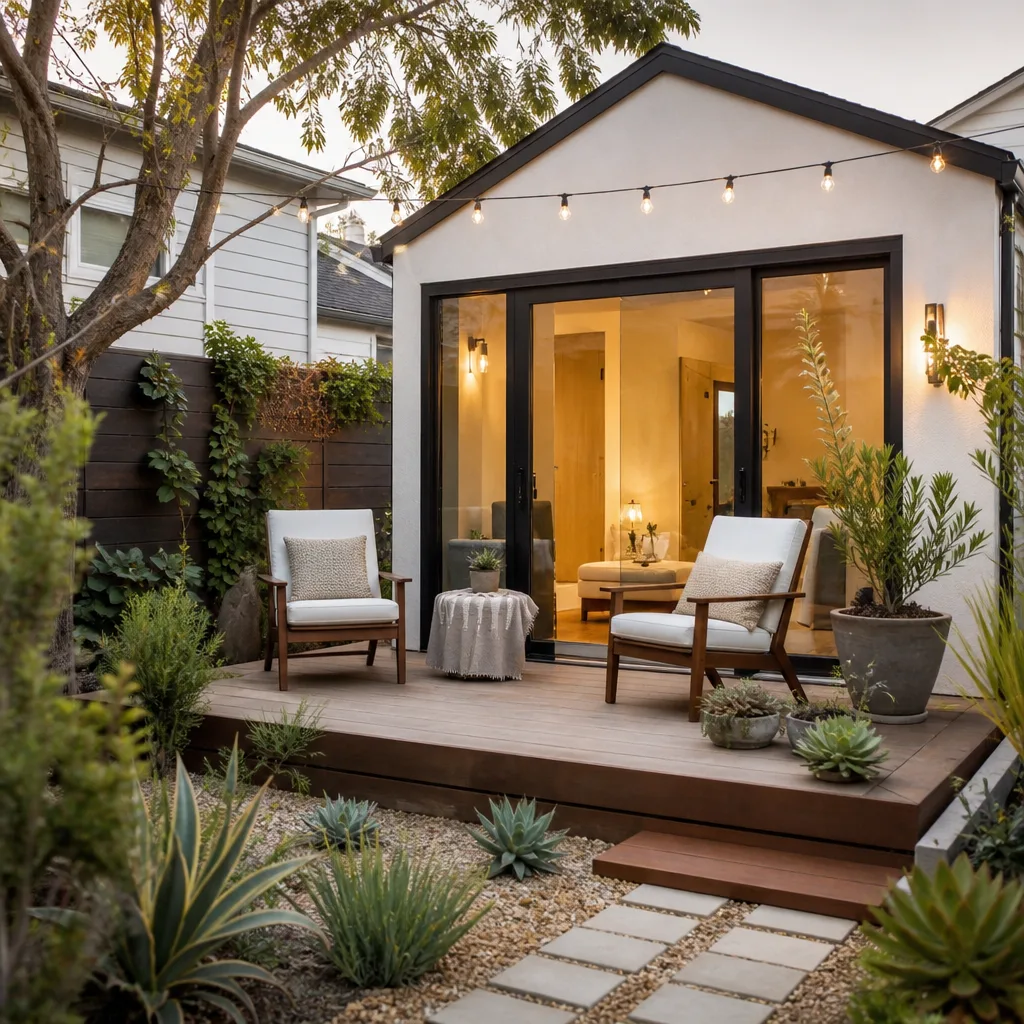
Most James Hardie ADU work in San Francisco falls into one of these buckets:
- Detached 1-bedroom ADU (400 – 600 sq ft) with HardiePlank siding: $120,000 – $190,000 all-in, including permits, foundation, electrical, plumbing, and finishes.
- Two-bedroom ADU (700 – 900 sq ft) with HardiePanel and HardieTrim: $210,000 – $310,000 depending on site access and whether we’re tying into existing sewer and gas lines.
- Junior ADU or garage conversion keeping existing Hardie siding: $85,000 – $140,000 if the shell is structurally sound and we’re working inside the existing envelope.
- Hardie siding replacement on an existing ADU: $14 – $22 per square foot of wall area, including removal, wrap, rainscreen where required, and new Hardie. A 600-square-foot ADU typically runs $16,000 – $25,000 for a full re-side.
Site access is the biggest price mover in San Francisco. A backyard ADU with a 36-inch walkway from the street to the build site costs more than one with a wide driveway, because every board and panel comes in by hand. Sloped lots in Noe Valley or Glen Park add foundation costs. A garage conversion is usually the least expensive path because the shell, roof, and often the existing Hardie siding are already there. Call (707) 760-0502 and we’ll give you a real number in writing, not a ballpark on a napkin.
Why San Francisco Homeowners Call Lodgewick ADU San Francisco for James Hardie Work
Most homeowners who call us have been burned before. They had a price change at the door. A crew that stopped showing up. A repair that failed a month later. That’s why we run every project through The Kingswell Way: say the price before the work, show up in the window we gave you, leave the site cleaner than we found it, put the guarantee in writing, and come back if the work fails within 365 days.
We work hands-on with James Hardie, and we also know how Abodu, Cover, and Dvele prefab ADU systems integrate with an existing Hardie-clad house in San Francisco. If you need a custom build, a prefab installation, or a garage conversion, we’ll match the materials to your lot, budget, and timeline, not the other way around. A live person answers our phone 24 hours a day, seven days a week. No voicemail loops.
I’m Russ Delmar, and I grew up in the San Gabriel Valley, where my dad kept framing squares on the kitchen table like most people keep mail. I studied construction technology at Los Angeles Trade-Technical College and spent years doing everything from foundation work to finish carpentry before ADU work, which is accessory dwelling units, meaning a second living space built on a property you already own, became the focus I’d been looking for. Tell me what the space needs to do, and we’ll figure out how to build it right.
FAQs
In most cases, no. The prefab manufacturer’s warranty covers the structure and the interior systems they build in the factory, while the siding is a site-installed finish that you can choose and change independently. We’ve installed Hardie siding on prefab ADUs in San Francisco after the crane work was done, and the manufacturer’s structural warranty remained intact. Before we start, we’ll review your manufacturer’s warranty terms in writing so there are no surprises. Call (707) 760-0502 for exact pricing on any prefab-plus-siding combination.
A garage conversion with existing Hardie siding usually runs two to four months including permits, while a detached one-bedroom ADU with new Hardie cladding typically takes four to seven months from foundation to final inspection. San Francisco’s Department of Building Inspection has its own review cycles, and we’ll give you a specific schedule in writing before work starts. Call us for a written timeline on your specific project.
For San Francisco’s marine climate, HardiePlank lap siding is the most common choice because it handles the fog cycle well when properly edge-sealed, while HardiePanel works well for contemporary ADUs so long as a rainscreen gap is included. We’ll recommend the specific line and paint finish for your site after the site walk, and you’ll see that recommendation in the written estimate.
Yes. James Hardie offers a range of ColorPlus factory finishes, and we can typically match the color on your existing siding using the line’s current palette or a custom paint match in the correct sheen and fade resistance. We’ll do a side-by-side sample before we commit to a color so you see exactly what the ADU will look like against the main house.
We do both. Lodging a full ADU build is our focus, but we also handle James Hardie siding repair on existing ADUs and main houses in San Francisco, from edge wicking and caulk failure at trim joints to panel replacement after impact damage. You get the same 365-Day Done Right Promise on a repair that you get on a full build. Call (707) 760-0502 and we’ll schedule a site walk.
We’re ready to talk about your James Hardie ADU in San Francisco. Call (707) 760-0502 to schedule a free estimate with Russ Delmar. We’ll walk the site, give you a written price, and answer every question in plain English. No pressure, no voicemail maze, no number that changes at the door.
Written by Russ Delmar, Owner, Lodgewick ADU San Francisco at Lodgewick ADU San Francisco, serving San Francisco and nearby areas.


