
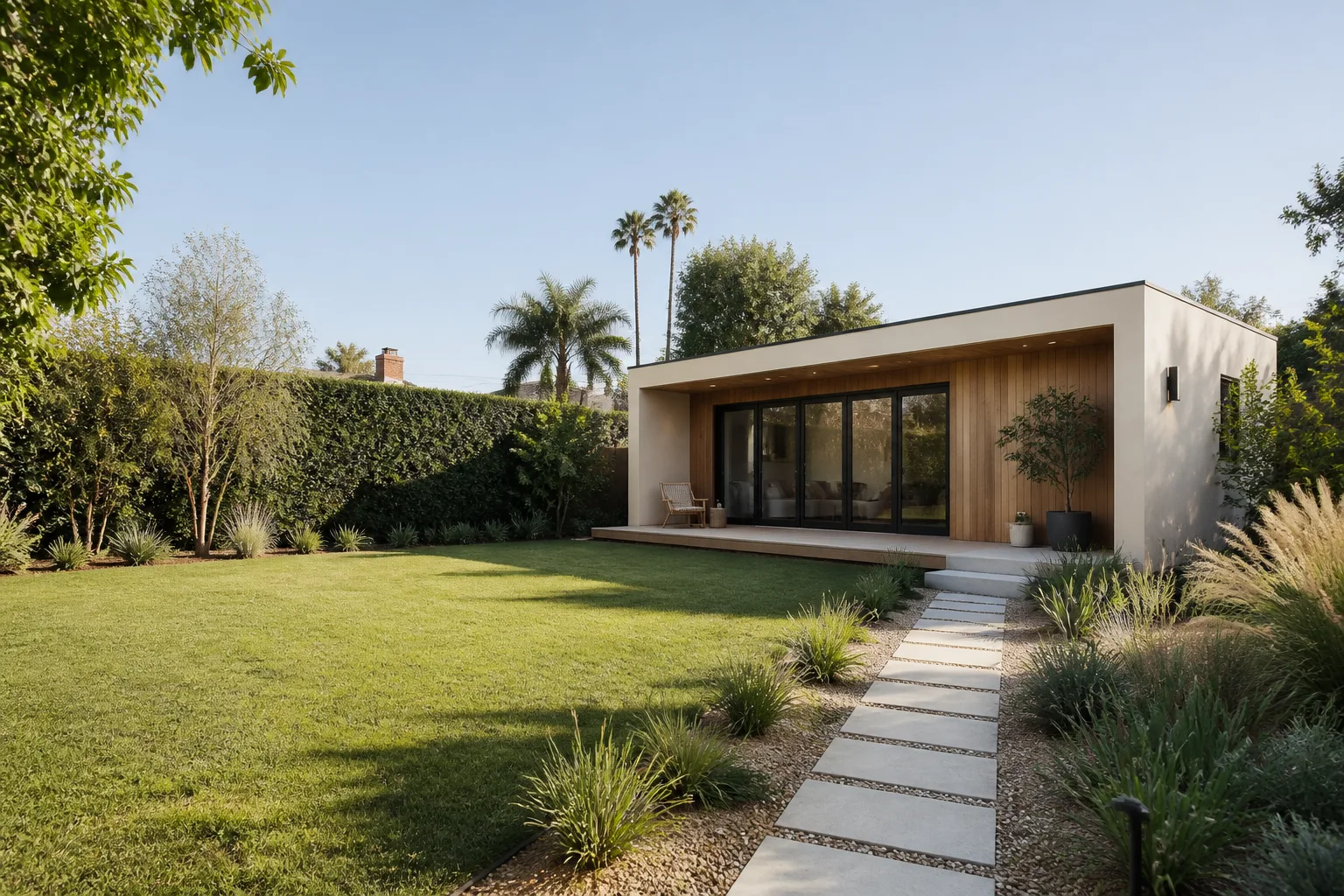
Tuff Shed New Detached ADU: The San Francisco Owner’s Guide
If your Tuff Shed new detached ADU is showing signs of structural trouble, water intrusion, or a failing component like a door, window, or roof panel, we stock compatible replacement parts and install them throughout San Francisco, typically for $450 to $2,800 depending on what’s failed and how much opening-up is required. Most owners call us after noticing a corner seam pulling away, a door that no longer latches square, or daylight (and fog drip) showing through what used to be a tight wall joint. The failure usually isn’t the whole building. It’s one part that gave out, and the fix is often a same-week job once we’ve matched it to your Tuff Shed’s series and panel size.
Key Takeaways:
- Tuff Shed ADU replacement parts in San Francisco typically run $450 to $2,800 installed, with most repairs landing under $1,500.
- We’re an independent service provider, not affiliated with Tuff Shed, but we work with their ADU models regularly and carry common fasteners, trim profiles, and hardware on the truck.
- A failed part does not mean a failed structure, but San Francisco fog, bay wind, and clay-heavy soils in districts like the Sunset and Excelsior accelerate certain failures (more on this below).
- Call (707) 760-0502 and you’ll get a live person who knows Tuff Shed ADU parts, not a call center.
Russ Delmar has walked Tuff Shed ADU sites across San Francisco for the better part of a decade. What he’ll tell you is that most owners wait too long to address a small failure, and the repair cost climbs once moisture gets past the exterior skin. A $450 door re-hang in January is a $2,000 wall repair by March.
Which Tuff Shed Models This Applies To
Tuff Shed’s ADU line has shifted over the years, and the part you need depends on which generation you’re working with. The original Tuff Shed ADU shells (sometimes sold as “ADU Shell” or “Studio Shell” units) used standard 2×4 wall framing with OSB sheathing and T1-11-style siding, while newer builds lean on prefinished hardboard or metal-clad wall panels that lock into a channel-and-clip system. The hardware is not interchangeable between those two generations, and that’s the most common ordering mistake we see in San Francisco: an owner buys a replacement door kit spec’d for the old shell, then finds the rough opening on the newer panel-built unit is 2-1/4 inches narrower.
The fastest way we identify the correct part is to have the owner check the metal ID tag on the interior of the door frame or the corner brace under the roofline; it carries the series code (for example, “TSS” for studio shell, “TPB” for panel build) and the original ship date. If the tag is missing, we measure the wall panel thickness at a cut edge (3/4″ for older T1-11 assemblies, 1-1/8″ for newer composite panels), which narrows it down in about five minutes. We don’t push OEM parts in every case. For hinges, latches, corner trim, and drip-edge flashing, a quality aftermarket equivalent from a supply house we trust saves the customer $30 to $90 per item and holds up just the same in San Francisco’s salt air. For structural elements like load-bearing wall panels or the roof ridge beam connection, we go OEM or equal-weight spec every time, because that’s not where you gamble.
Signs Your Tuff Shed New Detached ADU Is Failing
- Corner trim pulling away from the wall plane. This is usually expansion and contraction working against the original caulk line and brad nails, not a framing problem. In San Francisco neighborhoods like the Richmond where temperature swings stay mild, this takes years. Near the bay with wind loading, it happens faster. The fix is re-bedding and re-fastening, usually under $500, but left alone it invites water into the sheathing gap.
- Entry door rubs the frame at the top corner or fails to latch without a body check. Tuff Shed ADU shells sit on pier or threaded-rod foundation systems, and San Francisco’s varied soils (sand out by Ocean Beach, expansive clay in the Excelsior) settle differently. The door doesn’t warp; the box shifts a quarter inch. Re-shimming the door and adjusting the latch is a straightforward job we do often.
- Soft spots at the bottom edge of wall panels, especially on the windward side. This is how San Francisco owners first notice moisture. The fog off the Pacific pushes fine droplets under flashing that looked fine in a drier climate. Once the panel bottom goes soft, the panel is done. Replacement cost depends on whether it’s a full sheet or a cut-to-size infill panel.
- Roof ridge vent or eave flashing lifting at one end. Bay wind gets under a loose edge and works it like a pry bar. We see this more on rooftop solar or vent penetrations that were never re-sealed after install. Catching it early means a re-seal. Catching it late means a roof panel replacement.
- Window corners showing dark streaks or bubbling at the sealant line. That’s moisture wicking behind the trim flange. The window unit itself may still be fine; the failure is usually the flashing tape and sealant at the rough opening. We cut away the bad sealant, re-flash, and re-seal. If the jambs are rotted, the window comes out and the rough opening gets rebuilt before a new unit drops in.
Replacement Cost & What’s Included
In San Francisco, a Tuff Shed ADU part replacement installed by us runs from about $450 on the low end to $2,800 on the high end. The low end covers a single door re-hang, latch adjustment, corner trim re-securing, or a small flashing re-seal. The high end covers a full wall panel replacement that requires removing interior finishes to access fasteners, or a roof eave rebuild after water has sat long enough to compromise the rafter tails. Parts are roughly a third to half of the total. Labor and the open-up, dry-in, and re-finish work make up the rest.
Here’s what the job looks like on paper:
- Door re-hang with latch and hinge adjustment: $450 to $700 installed.
- Corner trim removal, re-bedding, and re-fastening: $350 to $650 installed.
- Flashing and sealant repair at windows, ridge vents, or eave edges: $400 to $800 installed.
- Single wall panel replacement (painted to match): $900 to $2,200 installed, depending on panel type and interior access.
- Roof eave or ridge beam connection repair: $1,200 to $2,800 installed, depending on structural involvement and permitting needs.
Every one of these gets a written price before work begins. Not a range on a voicemail. A written number. That’s The Kingswell Way: say the price before the work, show up in the window given, leave the place cleaner than found, put the guarantee in writing, come back if it fails. The guarantee is the 365-Day Done Right Promise, and we mean it: if the repair fails within a year, we return and make it right, free of charge, in writing on every project. If your job requires a permit, we pull it. We don’t do unpermitted work in San Francisco; the planning department is not a lottery you want to enter twice.
DIY or Call Us?
For a Tuff Shed ADU, there are things an owner can check without risk and things that go sideways fast. Checking the ID tag, measuring panel thickness, and spotting soft spots with a screwdriver handle along the bottom edge are all safe. Re-sealing a loose trim line with an exterior-grade elastomeric is fine if you know how to cut out the old caulk cleanly. What we’d tell any San Francisco homeowner to avoid is pulling wall panels or touching anything that could be load-bearing without knowing how the unit was framed and tied down. Tuff Shed ADU shells can carry roof loads through the wall panels you might think are just siding. Open the wrong one and you’ve turned a $600 repair into a structural callback. Also, ladder work on a wet San Francisco roof is how people end up in the emergency room, and it’s not worth it for a drizzle of sealant. If you’re even a little unsure, call (707) 760-0502. We’ll tell you over the phone whether it sounds like a check-it-yourself situation or a we-should-come-out situation, and the estimate is free.
FAQs
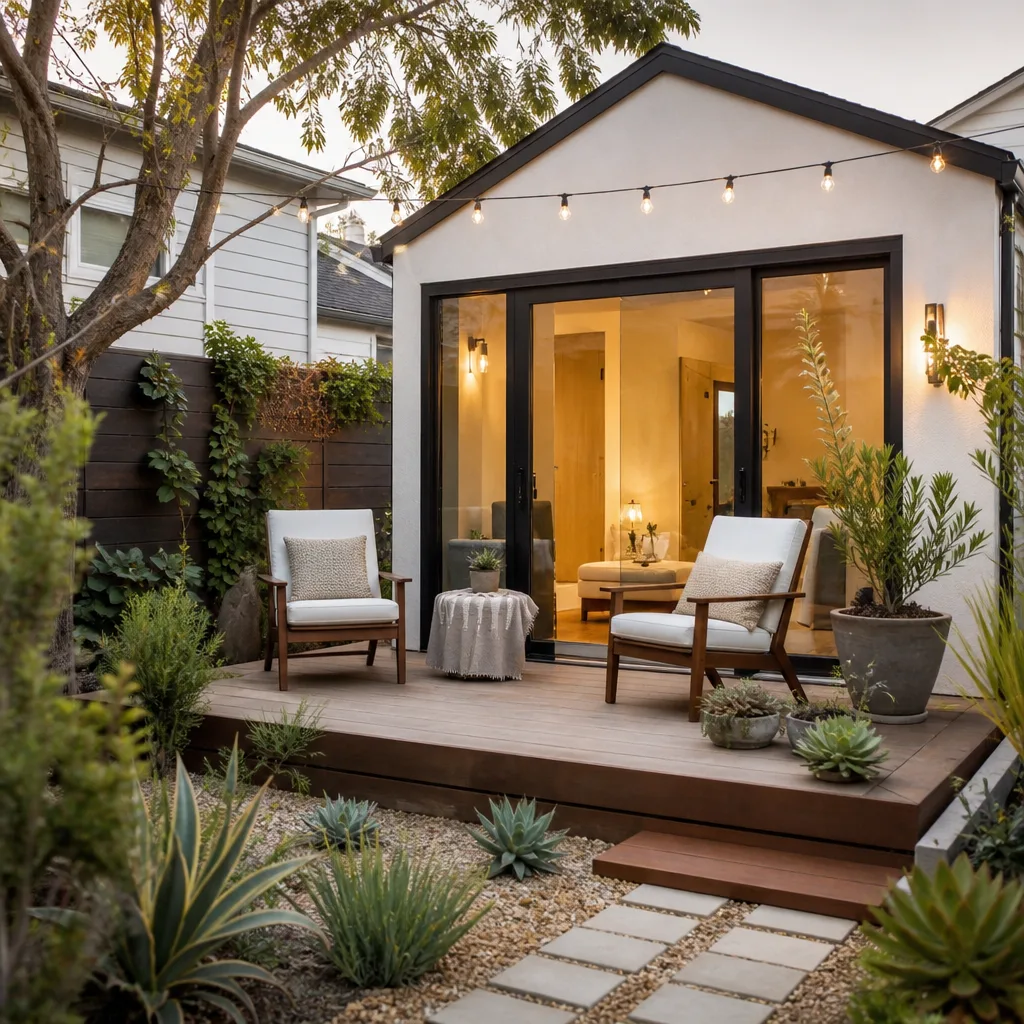
In San Francisco’s climate, a Tuff Shed ADU shell should last 20 to 30 years before the exterior skin and roof assembly need major work, but that assumes you catch small failures early and keep sealant lines fresh. The panels themselves hold up; what fails first is nearly always the flashing, sealant, and trim interface, not the panel material. If you’d like us to inspect your unit before a small issue becomes a panel replacement, call (707) 760-0502 for a free estimate.
Yes, in a lot of cases the failing part is the connection or sealant, not the component itself. Door alignment, trim fastening, and flashing re-seals are repairs we do regularly without replacing anything structural. Once a wall panel is soft at the edge or a rafter tail shows rot, the damaged material comes out and gets replaced rather than cobbled over. Call (707) 760-0502 and we’ll tell you honestly which category your issue falls into.
Most single-part replacements (a door re-hang, trim re-secure, flashing repair, or one wall panel) are done in a single day once the part is in hand and the weather allows exterior work. If the job requires a permit or involves structural repair, San Francisco’s review timelines typically add one to three weeks before we can start. The labor itself is usually still a day or two. Call (707) 760-0502 for a written timeline with your written price.
We carry common fasteners, trim profiles, flashing, hinges, latches, and panel patch stock on the truck because those cover most calls in San Francisco without a return trip. Specific parts, like a full wall panel in a discontinued color or a roof panel matched to an older series, usually take three to seven business days to bring in through our suppliers, including the channels we use for Abodu, Cover, and Dvele components. We handle the ordering. You never have to be the parts detective. Call (707) 760-0502 with your model’s ID tag info and we’ll confirm what’s available before we even schedule the visit.
Written by Russ Delmar, Owner, Lodgewick ADU San Francisco at Lodgewick ADU San Francisco, serving San Francisco and nearby areas.


